


French version
Vertical drama is a series of 60 to 100 episodes of 1 to 2 minutes each, shot vertically to be watched on a phone. Every episode ends on a twist, the first few are free, then you buy tokens to unlock the rest, which is what the coin model means, unless advertising funds the whole thing. The format comes from China, where it is also called microdrama, and it is worth somewhere around $14 billion.
If the format is new to you, this analysis of vertical drama takes a few minutes. It treats the format as a retention economy, and the cliffhanger as an accounting unit.
Since August I have been working back up the chain of this format, one link per interview. Four people so far, and four places in the same chain. Gennadiy Fefelov executes: a line producer in Los Angeles, the role that holds the budget and the schedule, 60 episodes, 6 to 7 days, 20 to 25 crew excluding cast, $100,000 to $200,000, non-union and therefore with no negotiated scale or minimums, and he delivers the rushes, the raw footage straight off the shoot, without owning any of what happens next. Guillaume Sanjorge produces and distributes: €20,000 to €50,000 a series, €300 to €600 an actor day. Gilles Daniel writes and assigns his rights: $1,000 to $5,000 for the script of a full season, $8,000 at the ceiling. Hugo Brisbois holds all three at once: co-founder of Sweetz, he runs the production, the app and the till, and he has just raised a little over €1 million.
The first three are paid to hold one position in a chain they did not order. The fourth one holds the till at the end of it. Calhoun is at none of those places. He wrote, directed, financed, and still owns the result, which makes his number the only one of these five with no client behind it.
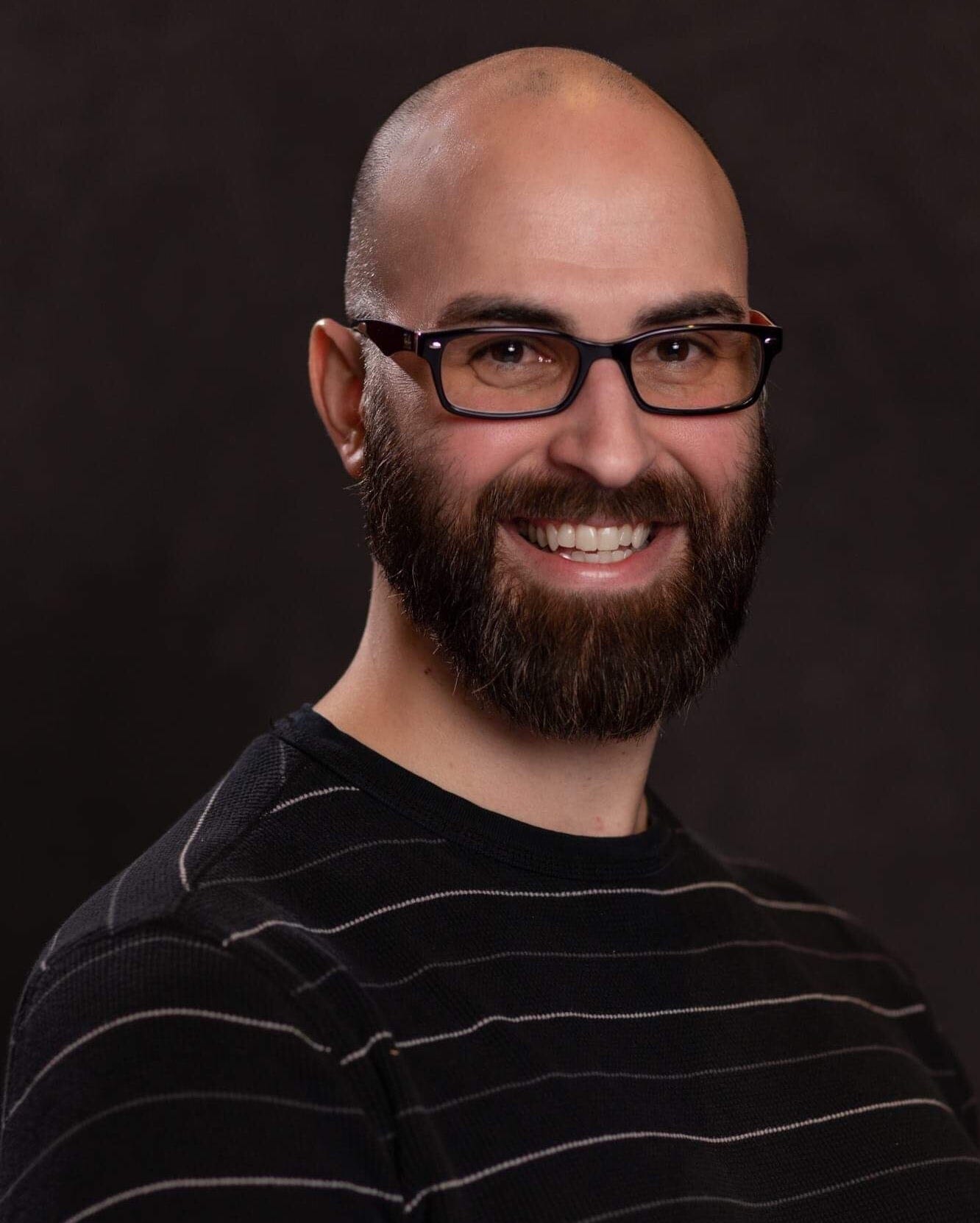
On 18 August, Geoffrey D. Calhoun wrote to me. A produced screenwriter with films released through Lifetime and Tubi, he is a best selling author of The Guide For Every Screenwriter and host of the #1 international podcast The Successful Screenwriter. He had just directed his first project, ELSY, 21 episodes of a post-apocalyptic psychological thriller built for the 9:16 frame, the vertical aspect ratio of a phone screen. His message said he had done the opposite of what works: a slow burn, a slow climb that settles tension instead of triggering it, inside a format built on speed. He answered in writing, in English, across two sets of questions, and agreed to be named.
$10,000. 21 episodes. 5 shooting days. 8 people on the crew. Self-funded, with the money writing had earned him.
Put the numbers side by side and do the division yourself. Fefelov: $1,667 to $3,333 an episode, and he stops at the rushes. Calhoun: $476 an episode, post-production, colour, mix and subtitles included. Three and a half to seven times cheaper, for something more finished.
Neither of them is inflating anything. They describe two different operations, and the second one has no funder.
What the $10,000 bought
This was my first follow-up question, and it decided everything else. The budget of a line producer who does no post-production and the budget of a director who delivers finished episodes do not cover the same work.
“The $10k covered the entire process from pre-production to post, including the finished episodes.”
“From the beginning, I approached Elsy the way I would shoot a microbudget short film. We had a fixed budget, kept the team small, combined responsibilities where it made sense, and designed the production around the resources we had.”
The credits bear that out position by position. Lee Vander Boegh is credited three times on the series, Kristy Leigh Lussier four.
“So the $10k isn’t just the cost of five days of shooting or a figure that stops at rushes. It’s what I invested to take a 21-episode season from pre-production all the way through post and finished episodes.”
21 episodes averaging 90 seconds make 31 and a half minutes of finished programme, which works out at $317 a finished minute. The same division on Fefelov’s side depends on how long his episodes actually run, and he gives 1 to 2 minutes, so his finished minute sits somewhere between $833 and $3,333.
There is one large reservation. The 6 months of pre-production are mostly his own time, and he did not count it. In the answer below, DP is the director of photography and AD the assistant director who breaks the script down into a shooting schedule.
“The six months of pre-production was primarily my own time, with my set designer and producer coming in for a few weeks helping with costuming, set pieces, and casting. My DP helped me develop the storyboards as my AD broke down the script to prepare for the shoot. That work was included in their overall compensation for the project.”
“I didn’t pay myself separately as the writer or director, as I am the investing EP.”
The investing EP is the executive producer who puts the money in. Here that is him.
So $10,000 is the cash that left the account. It is not the full cost. The season also carries 6 months of unvalued labour, his own and part of his producer Katie Presto’s. The two scopes are worth reading side by side: here that time never enters the budget, and in a European production it does.
The set is a break room
They shot at Vault Studio, in Wixom, Michigan. The script called for a bunker. Building a bunker cost more than the entire budget.
“Initially, I assumed we’d have to build the bunker from scratch, which would have eaten up more than my entire budget. Then my producer, Katie Presto, called me into the studio’s break room. It was small, compact, and lined with industrial shelving. We looked at each other and basically knew: this is the bunker.”
“So instead of building a traditional set, we transformed the existing room. Our set designer, Henry Kozak, Katie, our PA, and I dressed it. We custom-cut faux concrete panels and attached them to the walls using more than 500 removable adhesive strips.”
“That’s what $10,000 filmmaking looks like.”
The PA in that answer is the production assistant, the most junior paid job on a set. The rest sits in budget items no collective agreement knows how to name. Facebook Marketplace pickups. 3 days in his garage hand-painting foam blocks to look like concrete, then 17 hours dressing the location.
“Once we finished dressing it and you walked onto that set, you felt like you were underground in a shelter. The outside world disappeared. Even our lead, Karly Coffee, would sometimes sit alone in the shelter during breaks and just take it in.”
75% of the budget
My view: the number that matters in this interview is not the budget, it is how the budget was split.
“Altogether, roughly 75% of the budget went directly toward paid cast and crew.”
“One non-negotiable for me was paying everyone. I paid every cast and crew member. I’d heard too many stories about people working on indie films who weren’t paid, or sometimes weren’t even fed on set. That was unacceptable to me.”
“We probably had the best indie-film craft table in Michigan.”
“Joking aside, I believe paying and taking care of people tells them that their work is respected. It also creates an environment where people can concentrate on doing their best work rather than wondering whether the production values their contribution.”
A craft table is where the crew eats on set.
$7,500 went to cast and crew. That sum covers 8 crew members, the cast, the 5 shooting days, and the weeks of preparation his director of photography and first assistant director put in beforehand, which were folded into the same compensation.
The French benchmark is published. Under the national collective agreement for audiovisual production, the floor rate for a performer in a dramatic production is €304.99 gross, a scale in force since 1 June 2026. For one person. For one day.
So this does not carry over to Europe at the same price, and he never claims that it does. What travels is the organisation. The budget stays where it was made: 8 people covering several jobs each, a location found instead of built, and 6 months of preparation so that 5 shooting days would hold. A production where three quarters of the budget is wages. The Chinese studios that industrialised the format, and the coin apps that sell it, run on the opposite arithmetic, and the wage line is the one they squeeze first. Chinese lead actors took a 50% pay cut this year, supporting roles 80%.
Pace first, model afterwards
I had put the question to him the other way round. In this format the pace is dictated by the cash register before it is dictated by the frame. The aspect ratio comes second. Under the coin model the paywall lands around episode 8 or 10, so a slow burn has to convert before it has taken hold. Under ad funding the metric becomes watch time, and slowness costs nothing at all. Under licensing or subscription, per-episode retention stops being the question.
“The pace came first.”
“Elsy has been a slow burn since its conception. I knew going in that this would make us different from much of what is currently succeeding in vertical. But this was how I felt the story needed to be told. I treated 9:16 as a storytelling format, not a monetization formula.”
“I knew the coin model and considered its demands while structuring the series, but I wasn’t willing to force the story into that model if I felt it weakened what we were making.”
He also worked on the frame itself. Vertical shoots in medium shots and close-ups, because that is what dialogue on a phone asks for.
“My DP, Lee Vanderboegh, and I spent weeks working through storyboards and blocking specifically for 9:16. We constantly thought about how to build out the foreground and background to create depth, rather than simply placing an actor in the center of a vertical composition.”
“The bunker was particularly useful for that because we could layer objects at different distances from the camera and use the environment to make Elsy feel boxed in or isolated. I didn’t want the audience simply watching a close-up of someone inside a shelter. I wanted them to feel like they were inside the shelter with her.”
“From the beginning, my business plan was primarily straight licensing, ideally to a subscription-based streamer, so that platform’s audience could discover the finished series.”
Straight licensing means selling the finished series to a platform that exploits it, with no co-production and no commission upfront.
Episode 8
The episodes average 90 seconds. Each one closes on a hook, a line or an image that makes leaving costly.
“The first major turn lands in Episode 8. That’s where the relationship we’ve spent the opening episodes building between Elsy and Charlie is violently disrupted. She hears a struggle over the radio, Charlie screams, and then there’s a shotgun blast. Cut to black!”
“I actually found your observation about coin-model paywalls landing around Episodes 8–10 fascinating. I didn’t structure Elsy around a coin paywall, yet that’s exactly where my first major turn naturally landed.”
The coin paywall was not placed at random, since the platforms moved it until they found the spot where the viewer pays. Calhoun was looking for the spot where the viewer can no longer leave, and he landed on the same episode.
In this one case, and only in this one, the cash register bent nothing at all. It measured.
The first four episodes
The audience data came back with the second set of answers, carrying the limit he puts on it himself.
“I initially released the first three episodes with faster cuts, closer to the fast pace of verticals. We then recut them to align with the vision and tone of the show as intended, with longer takes, more atmosphere, and a deliberately slower burn.”
“One early number caught my attention: Episode 1’s like rate increased from 3.6% on the original cut to 5.7% on the cinematic version. We saw another encouraging signal with Episode 3, where the skip rate dropped from 71.2% on the faster version to 64.1% on the cinematic recut.”
“The overall audience is still small and broad discovery remains a challenge, but I’m beginning to see encouraging engagement from the people finding the series. Episode 4 is now getting most of its views from non-followers, and Instagram is showing like, share, and repost rates above our typical performance.”
“We’re only four episodes into the rollout, so it’s too early to draw a conclusion of course, but I’m encouraged by the engagement we’re seeing from the people who are actually connecting with it.”
The skip rate counts the viewers who move to the next video without finishing this one. The measurement covers a before and an after on the same episode, a few weeks apart, which gives a direction rather than a proof, and he writes as much himself.
The series runs on his podcast’s Instagram account, 16,000 followers, and on YouTube and TikTok as well.
One distributor, no offers
“We’re still very early in the process, so I don’t want to make it sound further along than it is. My distributor is taking the completed series to vertical platforms.”
“Before production, there was already some indication from the distribution side that platforms were looking for this kind of content. Since completing the project, one major streamer has seen the trailer and requested to see more. There are no offers yet.”
“That’s actually part of what makes this experiment interesting to me. I financed and completed the series without a platform commissioning it, so now I’m learning firsthand what the marketplace actually looks like for an independent filmmaker walking in with a finished native-vertical series.”
The season has been complete for months and is being released in instalments on social media while a distributor shops it. That is the exact position the other four do not occupy. Fefelov delivers and gets paid. Sanjorge distributes what he produces. Gilles Daniel wrote four microdramas in 2025 and was never paid at all. Hugo Brisbois holds the production, the app and the till in one piece.
Calhoun holds a finished season and waits for a buyer. The risk has changed hands.
What he would change
“I’d give myself more shooting days. We shot 21 episodes in five days, and we ran extremely tight and fast. We got it done, but a few additional shooting days would have given us more creative breathing room.”
“And thank God for our AD, Kristy Leigh Lussier. She kept us rolling and on time. She was really the heartbeat of the set.”
“What I wouldn’t change is the amount of pre-production. For an independent production like this, pre-production is everything. Six months may sound excessive for 21 roughly 90-second episodes, but we couldn’t afford to figure things out on set.”
“Every second I could spend solving a problem before the cameras rolled was money, and time I didn’t have to spend solving it during those five shooting days.”
And the question I had put to him for Europe.
“My advice to a European producer: don’t confuse vertical with cheap or disposable. Yes, you can make vertical content for substantially less money than traditional television. But if you want the audience to believe the world, you still have to build that world. Casting, production design, cinematography, performance, crew, and preparation don’t become less important because the frame is 9:16.”
“The vertical frame isn’t a limitation to work around. It’s another canvas.”
What this interview moves
The series of interviews had produced one constant: AI brought down the price of the image, not the price of the text. Calhoun does not contradict that. He moves the question of who places the order.
Gilles Daniel had priced what a microdrama script earns, $1,000 to $5,000 for a full season and $8,000 if you are a star of the format. Calhoun had made $10,000 from writing jobs. He put it into a season he owns.
It is the same money, and it is no longer the same trade.
The move has a cost he names himself: 6 months of his time, unpaid, and a risk no platform carries for him. It also has a return the others do not get. Fefelov delivers his rushes and owns nothing of what follows. Gilles Daniel assigns his rights in full, with no broadcast royalty. Calhoun holds his season, and it is the distributor who goes looking for the buyer.
Hugo Brisbois is integrated too, in the other direction. He has the production, the app and the till. Calhoun has the writing, the directing and the financing. The half he is missing is the one that takes the money.
$476 a finished episode, post included, against $1,667 to $3,333 for rushes in Los Angeles. The format was sold to Europe as a volume industry, on budgets that assume a supply chain. A full season was delivered by 8 people in 5 days, with three quarters of the budget in wages and a break room for a set. What that changes in Europe comes down to the price of labour: the method carries over, the budget does not.
Calhoun opened his books without being asked twice. If you have produced vertical in Europe, yours holds something nobody will ever publish. Write to me, off the record if you prefer.
To go further. If this article is your way in, start with the analysis of the format and its market, then the business model, which follows where the money actually moves. Then come four interviews, four positions in the same chain. The interview with Gennadiy Fefelov prices the shoot in Los Angeles, and it is in English. Guillaume Sanjorge’s describes the French plumbing. Gilles Daniel’s establishes the price of the text. Hugo Brisbois’s opens a French buyer’s view. And Dimension Interdite #4 shows what governments are doing with the format. (Those four are in French.)
Interview conducted in writing between 18 August and 10 September 2026, in English. Geoffrey D. Calhoun’s answers are reproduced without cuts inside the quotations. A French version is available, with the same quotations translated.