


Vertical drama is a series of sixty to a hundred episodes, one to two minutes each, shot vertically to be watched on a phone. Every episode ends on a twist, the first few are free, then you pay to unlock the rest — unless advertising funds the whole thing. The devices are those of the soap: thwarted love, revenge, humiliation avenged. The format comes from China, it is also called microdrama, and it is worth around $14 billion — our own estimate, with research firms ranging from $7.8 to $41.7 billion depending on what they count.
On 7 May, La Dimension Interdite #3 recorded the shift. A 60-episode series generated entirely by AI took the top spot on ByteDance’s largest microdrama platform. Vigloo, a studio working in the format, delivered 22 episodes in eight weeks for $33,000 with fewer than ten people. Holywater’s co-founder — the Ukrainian company behind the My Drama app — declared code red on AI usage on 30 March: the highest internal alert, the one that says switch now.
The next day, Benjamin Pott answered. Founder of Naralive, no capitalised studio, no free credits: every dollar spent on Seedance or Veo, the models that generate the shots, comes out of his own pocket. He gave the solo creator’s view, the one where you burn twenty-five dollars per broken scene.
The third view was missing. The one from the floor. The people who make the live-action that AI is supposed to replace, and who know what it actually costs.
On 14 August, Gennadiy Fefelov wrote to me. Line producer at TeraVision Production, in Los Angeles: the role that holds the budget and the schedule, the one who knows what each day costs. He has shot for My Drama and for DramaWave, two of the apps that sell the format. He offered to explain how the format is really produced. He answered in writing, in English, across four exchanges, and agreed to be named.
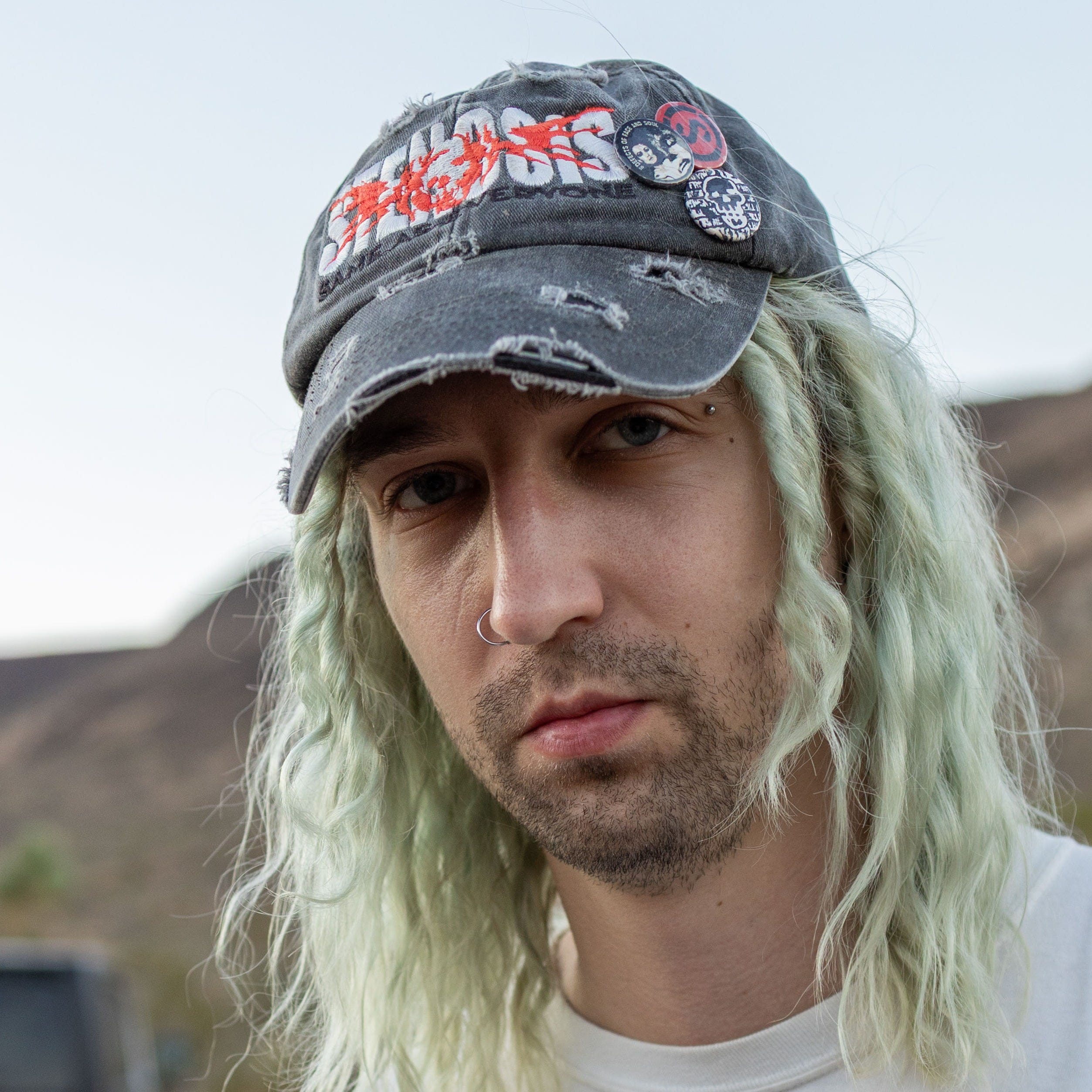
Sixty episodes. Six to seven shooting days, sometimes eight. Ten to seventeen pages a day. Twenty to twenty-five people on set, cast excluded. One hundred to two hundred thousand dollars all in. Non-union.
And a date. Late June 2026. The moment when, in his account, platforms saw their AI experiments turn a profit, and live-action orders stopped in Los Angeles.
Put the numbers side by side. Vigloo: 22 episodes, $33,000, fewer than ten people. Gennadiy: 60 episodes, $100,000 to $200,000, twenty-five people. Benjamin Pott: $120, one person, and a cat whose scarred eye heals itself by the thirteenth frame.
Three points on the same curve. The third one speaks.
The economics of a series
How many episodes, how many days, how many people?
“A typical series is around 60 episodes. We usually shoot for 6–7 days, although sometimes the schedule extends to 8 days.”
“Pages per day depend heavily on the script and the density of the material. If there are intimate scenes, stunts, or other technically demanding sequences, the page count will naturally be lower. On average, I would say we are shooting somewhere around 10–17 pages per day.”
The figure says nothing without a benchmark. A feature film shoots three to five pages a day, five counting as a strong day in Hollywood. A television drama does seven to eight. He shoots two to three times the pace of cinema, and double that of television.
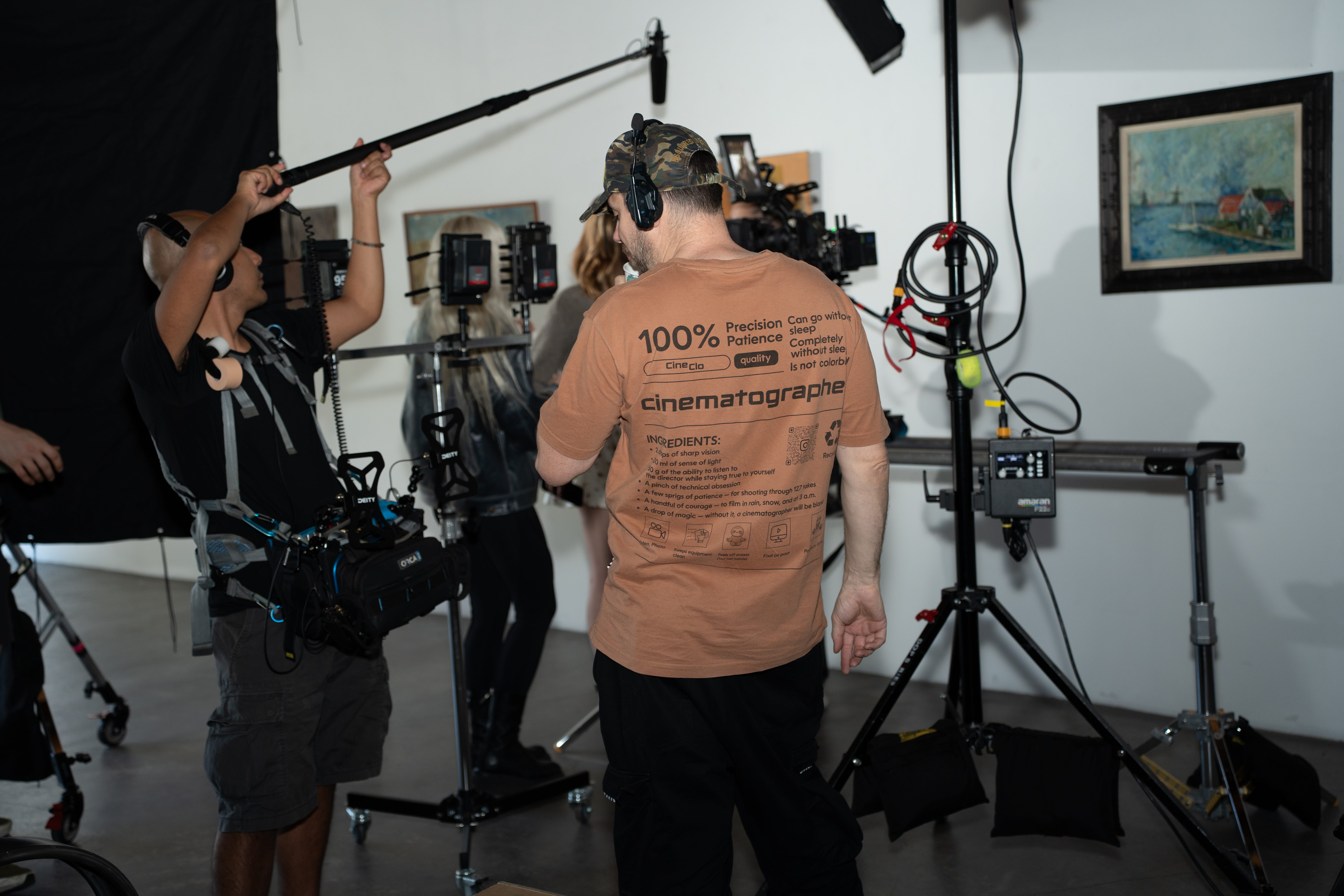
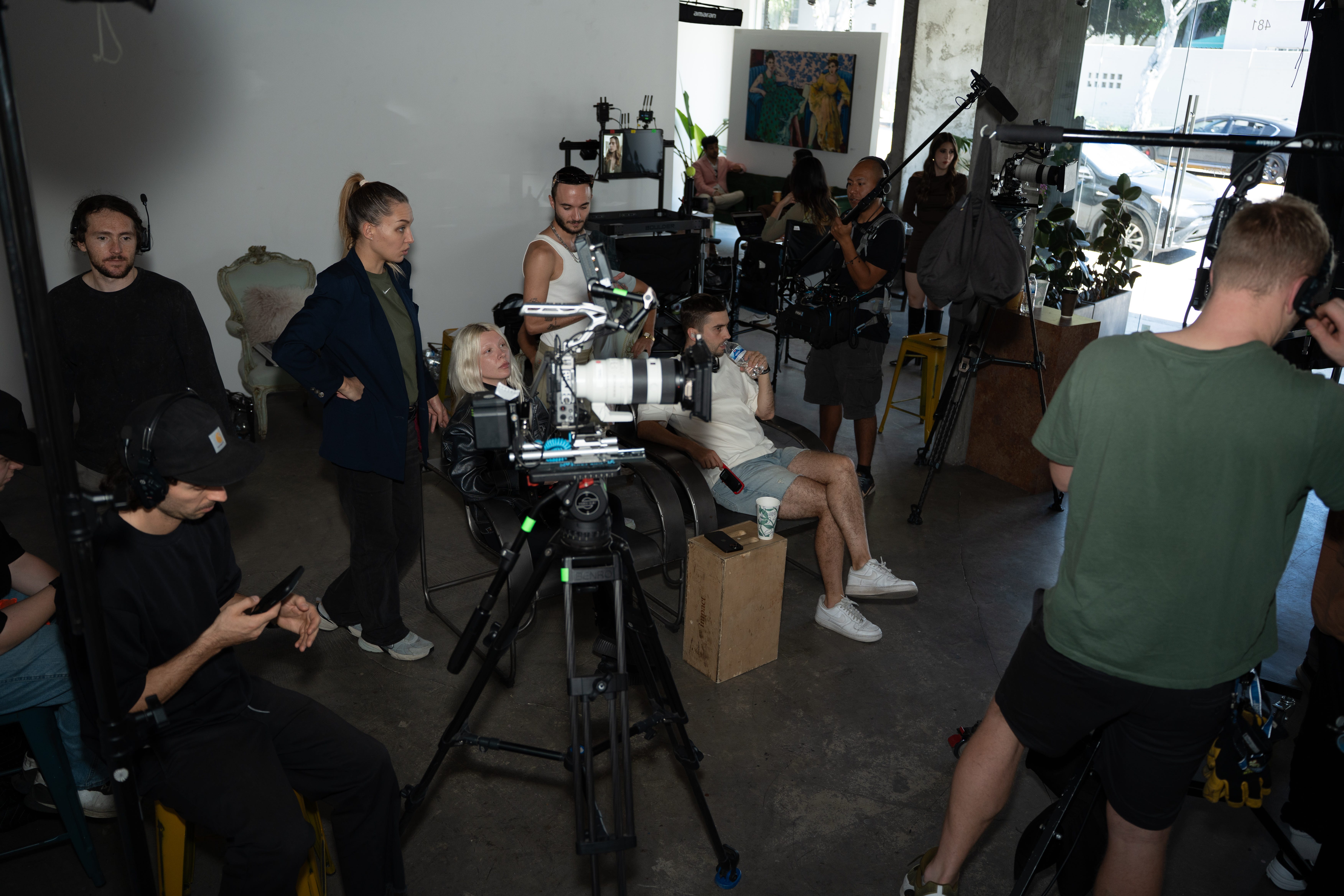
“The crew is usually around 20–25 people, not including cast.”
“For the all-in budget, the typical range is approximately $100,000–$200,000.”
For context: MIT Technology Review reported in May that producing a short drama in North America once cost roughly $200,000, and that AI could cut that cost by 80% to 90%. Gennadiy works at the lower end of that range.
Union or non-union?
“We work non-union.”
No negotiated scale, no minimums, no collective protections. Rates are set case by case, which explains what follows.
How many shoots run at the same time?
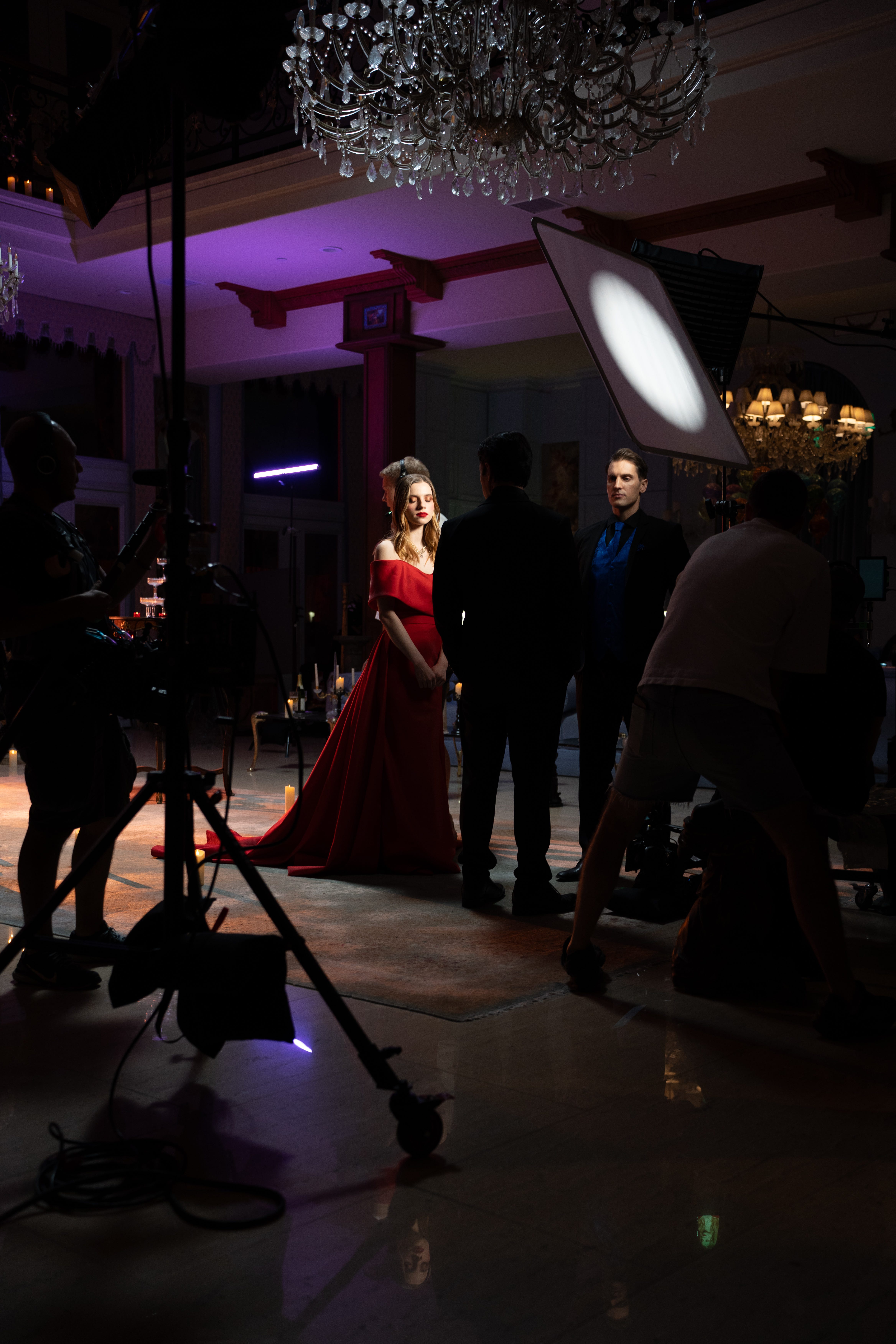
“We have indeed run two parallel units simultaneously, and on one occasion, we ran three. This means operating with entirely separate directors, DPs, stylists, production designers, and other department heads. I have managed a few of these units myself, while another line producer handled the others. I prefer to keep the members of those specific units together as a consistent team.”
A unit is a complete, self-contained shoot: its own director, its own cinematographer, its own department heads. Two units means two shoots advancing on the same day, on two different sets. Three, once. That is where the volume comes from.
And post-production?
“We do not handle any post-production. We deliver all raw materials directly to the clients, and they manage the editing and marketing themselves.”
What happened in late June
“At the end of June, it became clear that platform experiments with AI-generated vertical series yielded tangible results and started generating real revenue. A few AI-driven titles achieved significant viewership. Because generating a micro-drama series via AI is considerably cheaper, many platforms aggressively pivoted toward this format and scaled back live-action productions.”
“This led to a noticeable market contraction, leaving several Los Angeles production companies without active projects. We now have a few productions lined up for September, but the long-term trajectory of the market — and how long audience demand for AI content will persist — remains to be seen.”
He is in a position to see it: he is the one receiving the orders. No platform has announced a pivot, and no public figure contradicts him. A second witness says the same thing from the other end of the chain. On 18 August, an actor working in the format spoke on a specialist YouTube channel. Castings had gone from fifteen a day to one or two. In six to eight weeks.
What it does to rates
“For crew day rates, there hasn’t been much movement — they have remained relatively stable.”
“For actors, particularly leads, rates had increased over time. However, after what happened in June and the current AI-related pause in the industry, rates have dropped significantly.”
“Budgets are currently facing downward pressure, though in our case, figures remain negotiable per project. With the drop in live-action volume, talent and crew availability increased, leading many actors and crew members to accept lower rates. Whether this rate adjustment is temporary or a longer-term shift remains an open question.”
He is the one signing those rates — that is what the job is. And since the sector works non-union, there is no public rate card: nobody else is in a position to say it.
Scripts change, structure does not
“Scripts are gradually shifting. We are seeing a transition away from standard romance and revenge themes toward more unique settings, varied time periods, and storylines where romantic subplots are secondary. Audiences have saturated the conventional love-and-revenge tropes. However, this transition is incremental, and new scripts still retain core structural patterns from earlier models.”
This matches what was visible on 21 August: four players in the format, with no connection to one another, saying on the same day that the fight was moving from volume to genre.
Who writes?
“Scripts are provided directly by our main client, who subsequently licenses the series to platforms. We retain the flexibility to propose production-driven adjustments. When creative or logistical modifications make practical sense for the shoot, we initiate those discussions, and clients are generally open to refining the material with us.”
Advertising rewrites the scenes
“We are seeing a direct impact from ad-supported models. For instance, a project scheduled for September originally contained explicit romantic scenes. The script is currently being revised to replace those scenes with lighter romance (such as kisses and embraces) to align with advertiser-friendly content standards required by the purchasing platform.”
The advertiser no longer chooses where its commercial runs. It chooses what gets shot.
AI inside his own pipeline
“We approach AI tool integration cautiously on the physical production side. While script breakdowns can be run through custom AI agents, automated systems frequently miss critical logistical details that can compromise a live set, so manual script analysis remains our primary method.”
“However, AI is currently used in post-production for quick location concept renders — particularly for fantasy or non-contemporary time periods — and by production designers to build visual concepts from reference photos. We are currently testing custom AI agents specifically designed to perform accurate, error-free script breakdowns, budget estimates, and casting communication workflows.”
He came back to it eight days later, unprompted, to place the line exactly.
“Before cutting into a scene, if you want to show an establishing shot like a street view from a bird’s-eye angle, those specific shots can be generated using AI. As mentioned, the post-production teams handle those renders themselves.”
Segmentation and higher budgets
“Prominent Hollywood actors are increasingly taking roles in vertical series. As larger legacy studios enter the space, production budgets will naturally scale upward, which is a positive development for the industry. Our production team has not yet operated in the $400k–$600k tier, but we are positioned to support higher-budget formats as the market expands.”
Why Ukraine got there first
This was his longest answer, and the most useful for understanding the format’s geography.
“One of the earliest companies to really bet on the vertical format in Ukraine was AMO Pictures. As I understand it, several young people started focusing on this relatively new format of video production many years ago and began producing vertical dramas. They were among the early players in the space. Genesis, one of the major Ukrainian technology companies, noticed what they were doing, acquired the company, and began investing in the business.”
“At the same time, Ukraine already had a very developed video-production industry — film, television, music videos, commercials, etc. So it wasn’t particularly difficult to find experienced professional crews who could produce high-quality work quickly.”
“The beginning of the war also had a major impact. A huge number of production companies suddenly lost projects. The situation has been gradually recovering over the past couple of years, but especially during the first years of the war, there simply wasn’t the same amount of commercial production. For example, teams that had regularly been producing music videos largely stopped doing that because there was very little demand for new commercial music content.”
“Interestingly, many of the Ukrainian crews now working in the US did not necessarily come from vertical production in Ukraine. For example, I worked primarily in music videos and commercials before moving into vertical drama. A large part of our team has similarly worked in commercials, music videos, film and television, including relatively large productions with substantial budgets. In fact, many of us only started working on vertical series after coming to the US.”
“The cost structure in Ukraine also meant that production professionals could accumulate a lot of experience relatively efficiently. A project that might cost $100,000 to produce in Ukraine could easily cost $1 million or even $2 million in the US.”
That ratio holds for the work he comes from, music videos and commercials. His vertical series shot in the United States stay inside the $100,000 to $200,000 range given above: the format was designed for that.
“So I think what transferred from Ukraine to the US wasn’t necessarily a ready-made vertical-drama production system. It was the professional experience, production discipline and technical expertise of people who had already spent years working in other areas of the industry.”
Europe, and France
“Primary factors determining location choice include access to native English-speaking talent and high-value, visually compelling locations.”
“Producing a 60-episode series in Western Europe within a $100k–$200k framework is entirely feasible, and I believe local teams are already executing similar models. The primary logistical constraint to manage is securing strong casting choices with native English accents (specifically U.S. native accents).”
“Our operations are strictly U.S.-based and English-language focused, so we do not currently handle local-language original commissions.”
What this interview moves
In April, in Bound by Obsession, I mapped a pipeline from the outside: a Ukrainian founder, a co-founder never credited, and a production chain spread across Kyiv, Poland, Lisbon, Atlanta and Paris. AMO Pictures appeared there as the Central European shooting hub, with a further seventy vertical series announced in November 2025. Holywater appeared as having moved to Lisbon after the Russian invasion, two hundred staff by 2026.
Gennadiy is a voice from that pipeline. He has shot for My Drama, Holywater’s app. He names AMO Pictures as the starting point, and Genesis as the buyer. What I reconstructed from press releases and registries, he describes from a set.
What he adds, the map could not show. No vertical industry emigrated. A music-video and commercials craft lost its orders in 2022, and changed format by changing country.
That leaves the June date, and it carries the rest.
It marks the moment when replacement stops being a slide in a deck and becomes a budget line that no longer exists. What stays open is how far it reaches: his order book, Los Angeles, or the market. Two figures sit around it. ReelShort reaches its first real net profit in 2026. And China’s official audiovisual industry association measures AI-generated micro-drama at 95% of supply for 4% of views. Those two curves cross somewhere. Nobody knows where.
Gennadiy opened his books. If you produce vertical in Europe or in the United States, yours holds something nobody will ever publish. Write to me, off the record if you prefer.
To go further. La Dimension Interdite #3 sets out the shift as seen from the market. The interview with Benjamin Pott corrects it from the solo creator’s side. Les vendeurs de pioches explains who collects while everyone else burns cash on acquisition. L’usine chinoise à micro-séries passe la frontière follows the chain back to its origin. And Dimension Interdite #4 shows what governments are doing with all of it. (These pieces are in French.)
The next Dimension Interdite will cover what the format costs those who make it, and what it sells to those who fund it. This interview is its first piece.
Interview conducted in writing between 14 and 22 August 2026, in English. Gennadiy Fefelov’s answers are reproduced without cuts inside the quotations. A French version is available, with the same quotations translated.